
About Acceptance by Design
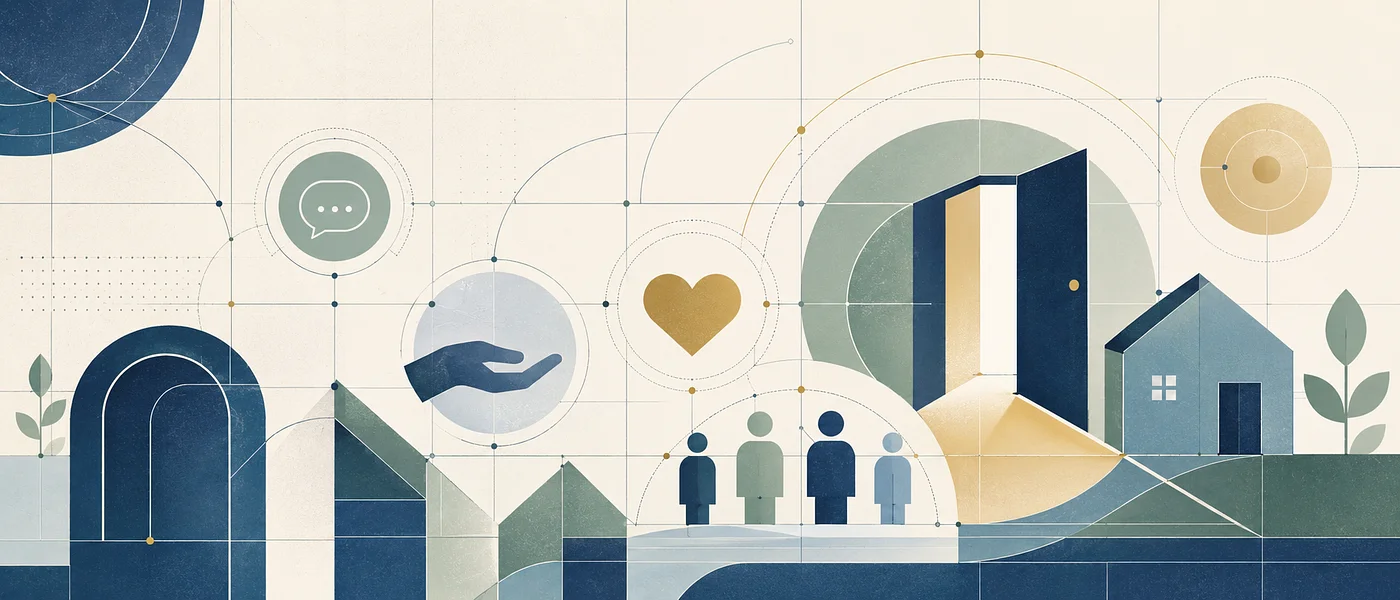
The Status Quo Is Already Designed
Acceptance by Design begins with a simple conviction: human worth does not have to be earned.
It does not depend on productivity, income, appearance, health, popularity, conformity, or usefulness to someone else. People should not have to prove that they deserve dignity, belonging, or a place in the world.
Yet many of the systems surrounding us communicate something very different. Our workplaces, technologies, institutions, media, products, and social expectations continually rank and compare people. They reward some forms of humanity while treating others as defective, embarrassing, inconvenient, or disposable.
These conditions did not simply appear from nowhere. Some were deliberately created. Others were inherited, normalized, and repeated without sufficient examination.
Either way, the status quo is already designed. Acceptance must be designed, too.
What Acceptance by Design Means
Acceptance is often treated as a private attitude: something we hope good people will eventually feel.
But attitudes develop inside environments. What people learn to accept—or reject—is shaped by language, images, rules, architecture, technology, policies, customs, and repeated everyday experiences.
Acceptance by Design asks what would happen if we intentionally created those conditions differently.
What if dignity were built into the places people enter, the tools they use, the stories they encounter, and the ways they are invited to see themselves and one another?
Good design cannot force people to become accepting. It can, however, prepare the ground: removing needless barriers, challenging harmful assumptions, making neglected possibilities visible, and creating experiences in which a more humane response can take root.
Like a garden, acceptance requires more than good intentions. It requires suitable conditions, continued care, and a willingness to repair what neglect or harm has damaged.
Cleaning the Lens
One idea from the earliest version of this work remains central:
Sometimes the lens needs cleaning—not the person.
When people repeatedly feel inadequate, humiliated, ashamed, excluded, or out of place, we tend to assume the problem lies within them. Sometimes personal change is needed. But sometimes people are seeing themselves through a cultural lens clouded by fear, prejudice, commercial pressure, impossible standards, or inherited beliefs.
Cleaning the lens does not manufacture human worth. It helps us recognize the worth that was obscured.
Acceptance by Design therefore does not promise a world without struggle, disagreement, or discomfort. It works toward something more practical: helping people identify harmful assumptions, imagine better alternatives, and intentionally create conditions that support dignity and belonging.
One Mission, Several Expressions
Acceptance by Design is the larger philosophy and home for a growing family of related work.
ShameProof
ShameProof applies the Acceptance by Design philosophy to our relationship with the naked human body.
It examines how bodily shame, automatic sexualization, fear, surveillance, and moral suspicion are taught and reinforced. It asks whether ordinary human anatomy has been burdened with meanings that do not inherently belong to it—and what a more truthful, consent-conscious, and humane relationship with our bodies could look like.
ShameProof challenges the conditions that produce exaggerated bodily shame and humiliation.
Dekan Swim
Dekan Swim explores what an alternative could feel like in practice.
It is a developing concept for clothing-free, immersive aquatic art experiences: respectful places where swimming, water, light, sound, architecture, and clear consent practices come together. Dekan Swim is not simply an argument for body acceptance. It asks how acceptance can be expressed through a designed environment people can enter and experience.
Its architecture, policies, privacy practices, photography rules, artwork, and social expectations are all part of the design.
ShameProof questions the conditions that produce bodily shame. Dekan Swim designs an alternative.
Other publications, apparel, educational resources, and public projects may address different aspects of dignity and belonging, but they grow from the same underlying commitment: acceptance should not be left entirely to chance.
From Humia to Acceptance by Design
This work originally appeared under the name Humia.
Humia was created to express the idea that human worth is inherent rather than awarded. That principle has not changed. But the name required substantial explanation before the work itself could begin.
Acceptance by Design makes the next step explicit. If human dignity matters, we must consider the conditions that either support it or wear it away. We cannot merely affirm human worth in theory while leaving our systems, environments, and cultural habits untouched.
The name changed because the work became more active: not only recognizing dignity, but asking how we can build around it.
Why This Is Personal
This is not an abstract exercise for me.
Acceptance by Design grew from experiences with health problems, employment, financial strain, shame, and systems that can make a struggling person feel as though their difficulties are proof of personal failure.
Those experiences taught me how easily human value becomes confused with output, income, health, appearance, or social approval. They also taught me that hopeful language is not enough. People need ideas, tools, communities, and experiences that help them see what is happening and respond constructively.
I do not claim to possess a finished blueprint for a kinder society. Acceptance by Design is a developing body of work: part cultural inquiry, part creative practice, and part invitation to build better conditions together.
If you have ever felt defective inside a system that was not designed around human wellbeing, you may already understand why this work exists.
You do not have to prove your worth before entering the conversation.
— David Mitchell Blood
Founder, Acceptance by Design
Creator of ShameProof and Dekan Swim
Explore the Work
-
Visit ShameProof to explore the cultural and educational work surrounding bodily shame, automatic sexualization, consent, and the unadorned human body.
-
Visit Dekan Swim to explore the developing vision for immersive aquatic art experiences built around bodily dignity, respect, privacy, and wonder.
-
Join the Acceptance by Design Action Network on Facebook to follow the work and participate in the conversation.
-
Visit the Support page to help sustain the development of these projects.